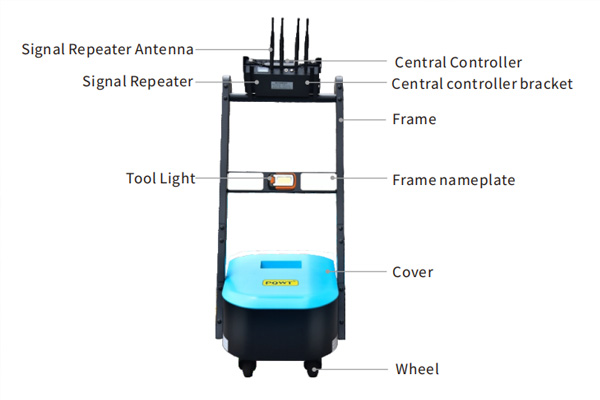
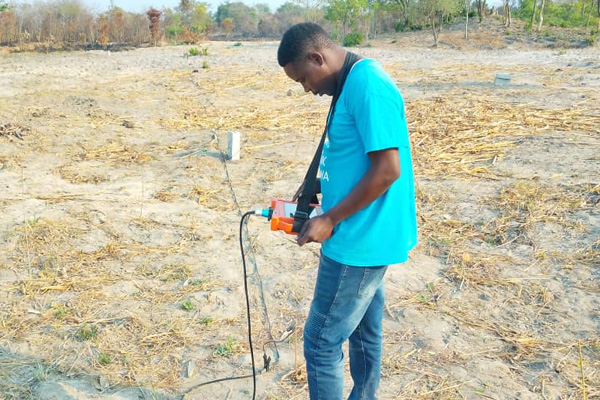
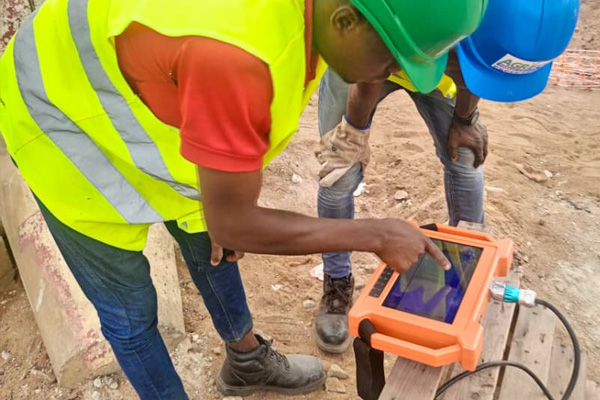
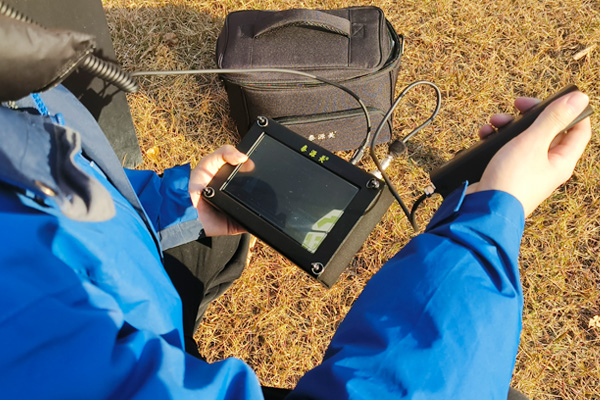
Finding a suitable location for a water well is an important step before drilling. Surface conditions alone do not always provide enough information about what lies underground. A groundwater detector can help survey subsurface conditions and identify areas that may be associated with groundwater-bearing formations.
Modern groundwater exploration equipment uses geophysical measurement methods to detect variations in subsurface electrical properties and geological structures. The resulting data can support site assessment, well planning, and geological surveys before drilling begins.
What Is a Groundwater Detector?
A groundwater detector is a geophysical instrument used to investigate subsurface conditions during groundwater exploration. Depending on the detection method, the instrument collects electrical or electromagnetic field information from the ground and analyzes changes associated with different geological formations.
The purpose of a groundwater detector is not simply to locate water at a specific point. Instead, it provides information about subsurface structures that may help identify potential groundwater-bearing zones.
For well drilling projects, this information can be useful when selecting survey locations, evaluating geological conditions, and planning further exploration.
Common terms used for this type of equipment include groundwater detector, underground water detector, water finder, and water finder machine.
How Does a Groundwater Detector Work?
Different groundwater detection systems use different geophysical methods. PQWT groundwater detection equipment uses electrical-field measurement technology to analyze changes in subsurface electrical properties at different frequencies.
These measurements can reveal variations between different geological formations. Areas with different electrical characteristics may indicate changes in rock type, fractures, faults, cavities, or other underground structures.
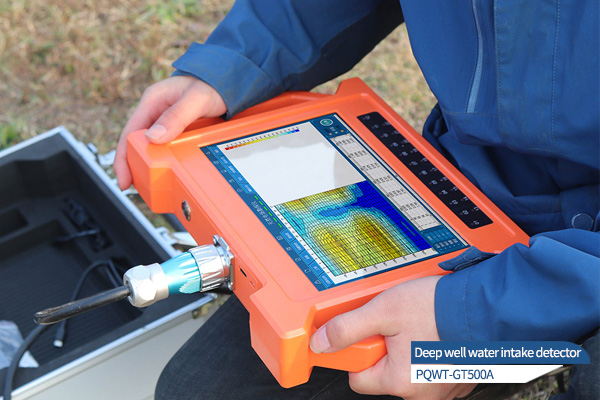
During a survey, the operator typically collects measurements at multiple points along a selected survey line. The equipment then processes the measurement data and presents the results through curves, profiles, or other graphical information.
This approach allows the survey team to compare different areas and identify subsurface zones that warrant further investigation.
Because geological conditions vary from site to site, groundwater detection results should be interpreted together with local geology, topography, existing well information, and other available data.
For a more detailed explanation of the measurement method, see our guide to the working principle of PQWT groundwater detectors.
How to Find Potential Groundwater Before Drilling a Well
Before drilling a deep well, a systematic groundwater survey can help reduce uncertainty about the subsurface environment.
A typical exploration process may include the following steps:
1. Collect Existing Site Information
Start by reviewing available geological maps, nearby well records, topographic information, and previous survey results. This information provides useful background for selecting potential survey areas.
2. Identify Suitable Survey Locations
Based on the available information, select areas where geological conditions may be favorable for groundwater occurrence. The survey area should also provide enough space for proper field measurements.
3. Conduct a Geophysical Survey
Use a groundwater detection instrument to collect measurements at selected points. Depending on the equipment and survey method, multiple frequencies and measurement locations may be used to obtain a clearer picture of subsurface variations.
4. Analyze the Survey Data
Review the measurement curves and geological profiles to identify significant changes in subsurface electrical characteristics. Zones associated with fractures, faults, cavities, or other geological structures may require additional investigation.
5. Select a Well Site for Further Verification
The survey results can be used as one source of information when selecting a potential drilling location. Final decisions should also consider local geological conditions and, where appropriate, drilling or other verification methods.
A groundwater detector is therefore best viewed as a pre-drilling exploration tool, rather than a device that guarantees the presence, depth, or yield of a water source.
Benefits of Using Groundwater Detection Equipment
Using geophysical equipment before drilling can provide several practical benefits for groundwater exploration projects.
Better Site Assessment
Groundwater detection equipment provides additional subsurface information that cannot always be obtained from surface observations alone.
Support for Well-Site Selection
Survey data can help operators compare different locations and select areas for further investigation before committing to drilling.
Non-Invasive Investigation
Geophysical measurements can be performed from the ground surface without immediately excavating or drilling the entire survey area.
Visualization of Subsurface Conditions
Some modern groundwater detectors can display measurement curves and geological profiles in real time, making field data easier to review and interpret.
Support for Deep Water Exploration
For projects involving deeper groundwater resources, suitable geophysical equipment can provide information about subsurface structures over the instrument's applicable detection range.
Applications of Groundwater Detectors
Groundwater detectors and geophysical exploration equipment are used in a range of water and geological survey applications, including:
- Water well site investigation
- Groundwater exploration
- Deep well exploration
- Underground water detection
- Geological surveys
- Fracture and fault investigation
- Exploration of potential groundwater-bearing structures
- Preliminary surveys for engineering projects
- Rural and remote-area water exploration
The appropriate detection method and equipment configuration depend on local geology, survey objectives, terrain, and required investigation depth.
PQWT Groundwater Detection Equipment
PQWT develops and manufactures groundwater detectors and geophysical exploration equipment for groundwater surveys and related geological applications.
The PQWT product range includes portable groundwater detectors designed for different exploration requirements and detection depths.
For example, the PQ225 series uses magnetotelluric field technology to measure changes in electric-field components at different frequencies. By analyzing differences in subsurface electrical properties, the equipment can help identify geological structures associated with aquifers, fractures, faults, and cavities.
The PQ225 series also provides automatic mapping and real-time curve or geological profile displays, allowing operators to review survey data directly in the field.
Depending on the model, the applicable detection depth ranges from approximately 50 m to 1,000 m. Actual survey results can vary according to geological conditions, site environment, survey configuration, and other factors.
For different groundwater exploration requirements, PQWT also offers other groundwater detection and geophysical survey equipment.
Why Use PQWT Equipment for Groundwater Exploration?
Selecting groundwater exploration equipment requires more than looking at detection depth alone. The equipment should also be practical for field work and suitable for the intended survey method.
PQWT focuses on the development and manufacture of groundwater detectors and geophysical exploration equipment for professional users.
Key considerations include:
- Portable equipment for field surveys
- Geophysical measurement technology
- Real-time data visualization on selected models
- Automatic mapping functions on selected equipment
- Different models for different exploration requirements
- Applications in groundwater exploration and geological surveys
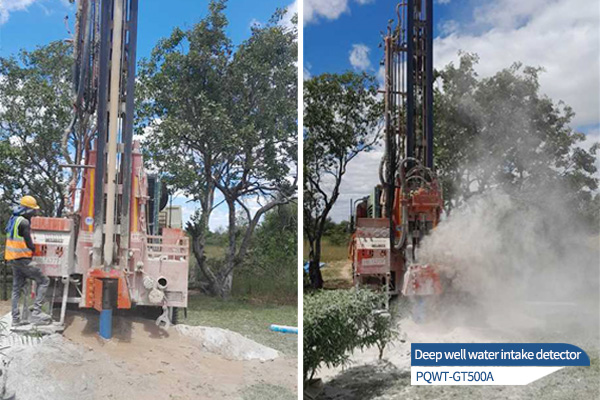
For well drilling projects, PQWT equipment can serve as part of a broader site investigation process, helping users collect additional information before drilling.
Frequently Asked Questions About Groundwater Detectors
How does a groundwater detector work?
A groundwater detector uses a geophysical measurement method to investigate changes in subsurface electrical or electromagnetic properties. PQWT equipment measures electric-field signals at different frequencies and analyzes variations in the underground environment to help identify geological structures that may be associated with groundwater.
How deep can a groundwater detector detect?
The applicable detection depth depends on the specific model, survey method, geological conditions, and field environment. For example, selected PQWT models are designed for investigation depths ranging from tens of meters to approximately 1,000 meters.
Detection depth should therefore be considered as an equipment specification rather than a guarantee of finding groundwater at that depth.
Can a groundwater detector locate underground water?
A groundwater detector can provide geophysical information that helps identify potential groundwater-bearing zones and related geological structures. However, the presence, depth, and yield of groundwater depend on local geological conditions. Detection results should be combined with geological information and, when necessary, drilling or other verification methods.
What equipment is used for groundwater exploration?
Groundwater exploration may involve groundwater detectors, geophysical survey instruments, geological mapping tools, drilling equipment, and other field investigation methods.
The equipment selected depends on the geological environment, target depth, survey objective, and project requirements. A groundwater detector is commonly used during the preliminary survey stage to obtain information about subsurface conditions before drilling.
Is a groundwater detector the same as a water finder?
The terms are sometimes used interchangeably in commercial searches. However, groundwater detector and groundwater exploration equipment are more precise terms for professional geophysical survey equipment, while water finder and water finder machine are broader terms commonly used by customers when searching for groundwater exploration products.
What should be considered before buying a groundwater detector?
Consider the required investigation depth, detection method, geological environment, survey area, data display functions, portability, and intended application. It is also important to understand that equipment performance and survey results can vary depending on local ground conditions and operator experience.