Underground utility networks are essential to modern cities, industrial facilities and public infrastructure. Water pipes, drainage systems, gas lines, electrical cables and communication ducts often share limited underground space. Without accurate utility information, excavation and construction work can damage existing infrastructure, cause service interruptions and create serious safety risks.
However, no single detection method works equally well for every underground utility. The most suitable approach depends on the pipe material, burial conditions, surrounding environment and the purpose of the survey.
This guide explains the main underground utility locating methods, their practical applications and the factors to consider before selecting detection equipment.

1. What Does Underground Utility Locating Involve?
Underground utility locating is the process of identifying the position, alignment and, where the technology allows, approximate burial depth of buried pipes and cables without unnecessary excavation.
The information is commonly used for:
Pre-construction utility surveys
Municipal infrastructure maintenance
Water supply and drainage system management
Industrial site planning
Excavation risk assessment
Underground utility mapping
It is important to distinguish utility locating from pipeline leak detection. Utility locating identifies where a buried asset is located, while leak detection investigates whether a pressurized pipe is leaking and helps identify the leak location.
Choosing equipment based on the actual survey objective is the first step toward obtaining reliable results.
2. Common Underground Utility Locating Methods
Different technologies respond to different physical properties. Understanding their operating principles helps survey teams choose the right method for each site.
2.1 Electromagnetic Locating
Electromagnetic locating is widely used to trace conductive underground utilities, including metallic pipes and electrical cables.
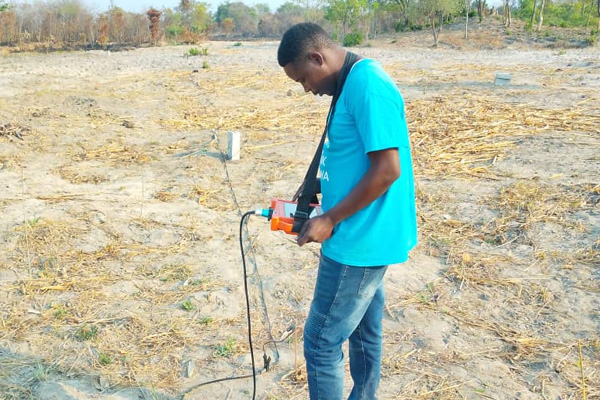
A transmitter introduces a signal into the target utility through a direct connection, an induction clamp or an inductive method, depending on the equipment and site conditions. A receiver detects the electromagnetic field generated by the signal and helps the operator trace the utility's route.
Typical applications:
Locating metallic water pipes
Tracing buried electrical cables
Identifying underground utility routes
Supporting excavation and maintenance work
Limitations:
Electromagnetic locating may be affected by adjacent conductive utilities, signal coupling, poor electrical connections and interference from surrounding infrastructure. Non-metallic pipes cannot normally be traced directly using conventional electromagnetic methods.
2.2 Ground Penetrating Radar (GPR)
Ground penetrating radar uses electromagnetic pulses to investigate subsurface structures. When the transmitted signal encounters boundaries between materials with different electrical properties, part of the energy is reflected back to the receiving antenna.
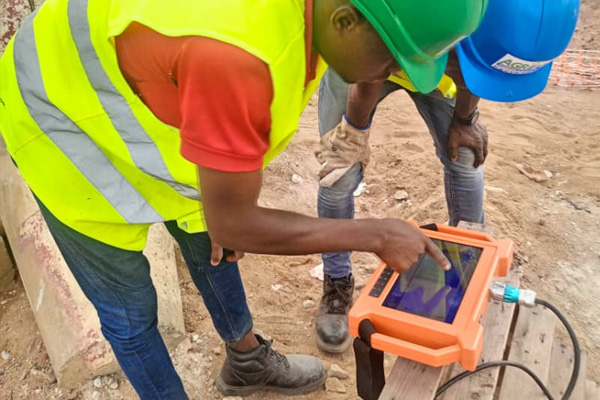
The resulting radar data can help identify buried objects, changes in soil layers and underground anomalies.
Typical applications:
Investigating suspected underground utilities
Detecting buried structures and subsurface features
Surveying areas where excavation records are incomplete
Supporting civil engineering and infrastructure projects
Limitations:
GPR performance depends on soil conditions, moisture content, target size, burial depth, antenna frequency and operator experience. Clay-rich or highly conductive soils can significantly reduce penetration depth. Radar images also require professional interpretation, and not every detected anomaly can be confidently identified as a pipe.
2.3 Acoustic and Leak-Related Detection
Acoustic methods are mainly used to investigate leaks in pressurized water pipelines rather than to map every buried utility.
When water escapes through a pipe defect, it can generate vibration and noise. These signals may travel along the pipe and through surrounding materials. Sensitive acoustic sensors can collect the signals for analysis.
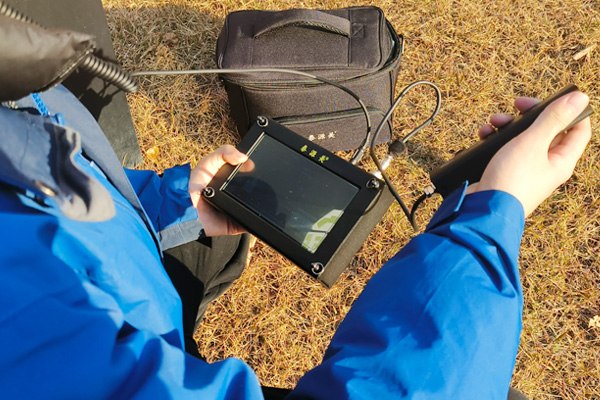
Depending on the instrument and survey conditions, operators may use listening sensors, ground microphones or correlation equipment to narrow down the suspected leak location.
Typical applications:
Investigating suspected leaks in pressurized water networks
Checking underground water supply pipes
Locating leak-related acoustic signals
Reducing unnecessary excavation during repair work
Limitations:
Traffic, pumps, nearby machinery, pipe material, pressure conditions and soil characteristics can affect signal quality. Acoustic leak detection should not be confused with general utility locating.
3. How Pipe Material Affects Detection
Pipe material is one of the most important factors when selecting a locating method.
Metallic pipes
Steel, cast iron and other conductive pipes can often be traced using electromagnetic locating equipment. The operator must still consider electrical continuity, connections and interference from nearby utilities.
Plastic pipes
PVC, PE and other non-metallic pipes do not normally produce a directly traceable electromagnetic signal. Their detection may require alternative investigation techniques, depending on the site conditions and available equipment.
Concrete and composite pipes
These materials can present additional challenges because their composition, reinforcement and surrounding soil conditions affect the available detection signals. The method should be selected according to the actual pipe structure and site conditions.
No detection technology should be assumed to work on every pipe material or at every burial depth.
4. Key Factors to Consider Before a Survey
Before selecting equipment, survey teams should establish the following information:
Detection objective: Is the task to trace a pipe route, estimate its depth, identify an underground anomaly or locate a water leak?
Pipe material: Is the target metallic, plastic, concrete or a composite material?
Burial conditions: What are the approximate depth, soil type and surface conditions?
Site environment: Are there nearby cables, pipelines, buildings, machinery or other potential sources of interference?
Site accessibility: Are there suitable access points for conducting the investigation?
Required accuracy: Is the survey intended for preliminary mapping or for guiding excavation and repair work?
For complex sites, combining more than one investigation method may provide a more reliable understanding of underground conditions.
5. Why Accurate Utility Locating Matters
Reliable underground utility information helps construction and maintenance teams make better decisions before excavation begins.
It can help:
Reduce the risk of damaging existing pipes and cables
Improve the planning of excavation routes
Support infrastructure maintenance and asset management
Minimize unnecessary digging and associated costs
Improve coordination between construction and utility teams
Detection results should always be interpreted alongside available utility drawings, site records and other relevant information. Where excavation is planned, the detected route should be verified in accordance with applicable local safety procedures.
6. Choosing the Right Detection Equipment
There is no universal underground locator for every detection task.
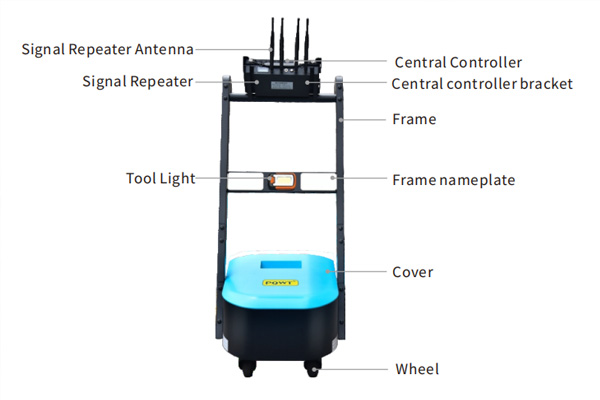
For conductive pipes and cables, electromagnetic cable and pipe locators are commonly used. For subsurface investigations involving different materials, GPR may be appropriate where ground conditions permit. For suspected water leaks in pressurized pipelines, dedicated acoustic leak detection equipment is more suitable.
PQWT provides equipment for different underground detection applications, including cable and pipe locating instruments and pipeline leak detection systems.
Before choosing a model, users should confirm the target material, detection objective, site conditions and required functions.
Explore the PQWT Cable & Pipe Locator application guide to learn more about underground utility tracing.
For suspected water leaks in pressurized pipelines, visit the PQWT Pipe Leak Detector range to review available detection solutions.
7. Frequently Asked Questions
Q1: What is the most common method for locating underground pipes?
Electromagnetic locating is commonly used for conductive pipes and cables. GPR may also be suitable depending on the target material, ground conditions and survey requirements.
Q2: Can a pipe locator detect PVC or PE pipes?
A conventional electromagnetic locator cannot usually detect a non-metallic pipe directly. Alternative investigation methods may be needed depending on the site conditions.
Q3: Is GPR suitable for all underground pipeline surveys?
No. Its performance depends on soil conductivity, moisture, target depth, antenna frequency and other site conditions. A site assessment is recommended before selecting GPR.
Q4: Is underground pipe locating the same as water leak detection?
No. Pipe locating identifies the position or route of an underground utility. Water leak detection investigates leakage in a water pipeline and helps narrow down the leak location.
Q5: Should multiple detection methods be used on complex sites?
Yes, where appropriate. Combining suitable methods and checking the results against site records can improve confidence in the survey findings.
Conclusion
Effective underground utility locating starts with understanding what needs to be detected. Pipe material, burial conditions, surrounding interference and survey objectives all influence the choice of technology.
By selecting the appropriate locating method and verifying the results before excavation, utility operators and construction teams can reduce risks and improve the efficiency of underground infrastructure projects.
PQWT offers detection equipment for different underground investigation and pipeline maintenance applications. Contact the PQWT team to discuss the equipment requirements for your project.