Underground pipeline leaks in urban water supply networks not only waste precious water resources but can also cause ground subsidence, wall dampness, and other problems. Quickly and accurately locating leak points is the key to efficient repair. This article presents a real-world case using the PQWT-PQ125B Leak Detector, demonstrating the complete process from leak detection to repair, and proving its professional reliability with practical data.
1. On-Site Leak Detection: Quickly Identify Problem Areas
In a residential community, residents reported a sudden drop in water pressure and long-term dampness in the hallways. Preliminary investigation suggested a leak in the underground water supply pipeline.
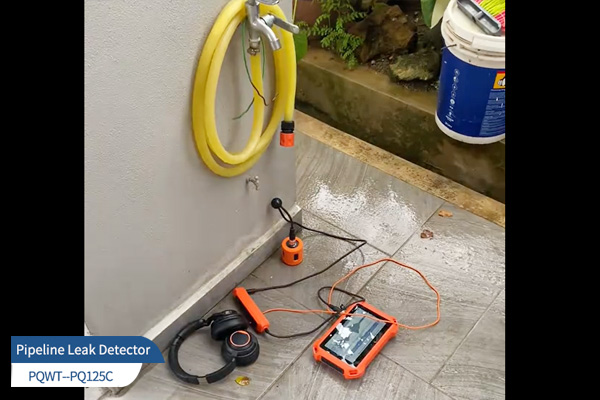
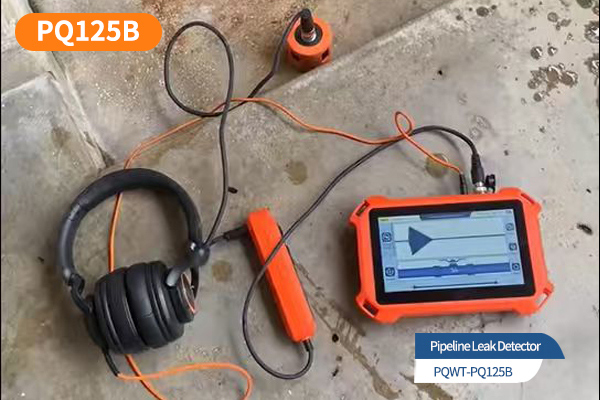
The maintenance team arrived on-site with the PQWT-PQ125B Leak Detector and conducted a systematic inspection of the pipeline area.
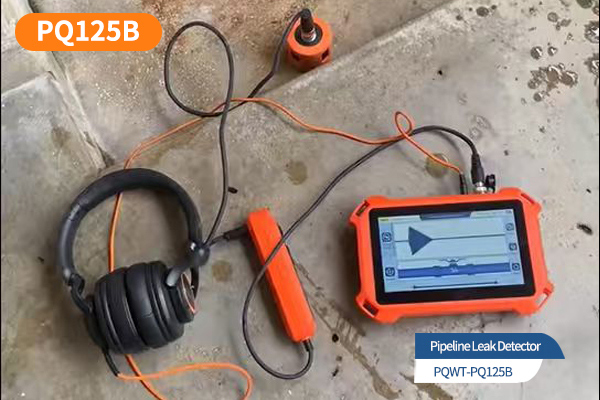
The PQ125B is equipped with high-sensitivity sensors capable of detecting even minor vibrations caused by underground leaks. The detection process included:
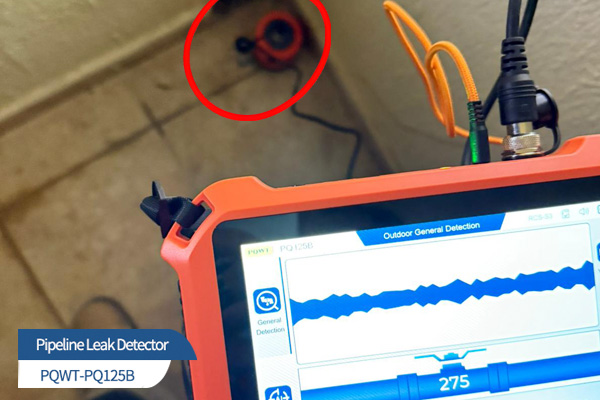
1. Placing sensors on the ground and at valve pits in suspected leak areas.
2. Observing real-time acoustic waveforms on the device screen.
3. Listening to leak sounds via headphones and gradually narrowing the detection range using the device’s localization function.
The PQ125B’s built-in noise reduction algorithm filters out background noise such as passing vehicles and pedestrians, ensuring clear leak signal identification. On-site testing pinpointed the leak to within 1 meter, completing the detection process in approximately 20 minutes and avoiding unnecessary excavation.
2. Excavation Verification: Zero Error in Precise Location
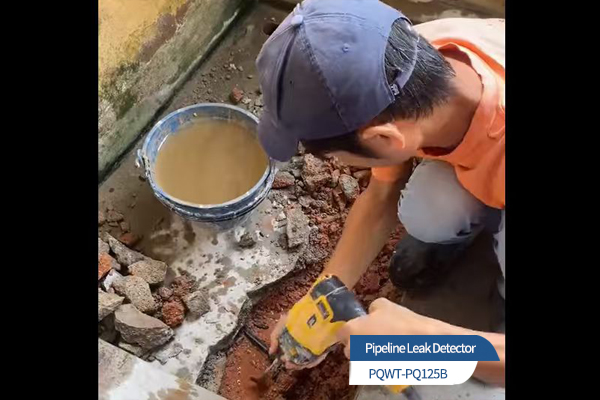
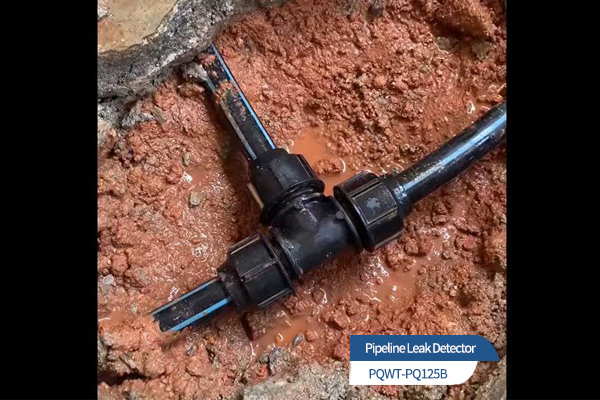
Following the PQ125B detection results, the team performed a small-scale excavation at the marked location. Unlike traditional large-area digging, only about 1 square meter of ground was excavated, successfully exposing the underground PE water pipe.
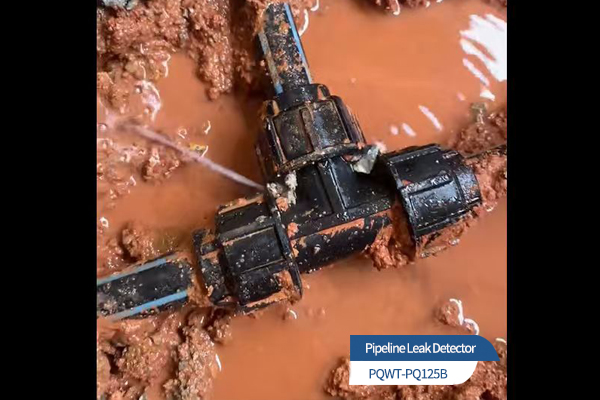
The pipe’s T-joint had a fine crack, with water continuously seeping out—perfectly matching the PQ125B detection results. This confirmed the high accuracy of the device, saving both time and reducing impact on the community’s roads and daily life.
3. Leak Repair: Efficient Resolution
After confirming the leak point, the maintenance team carried out repairs as follows:
1. Shut off the local water valve and drained residual water from the pipeline.
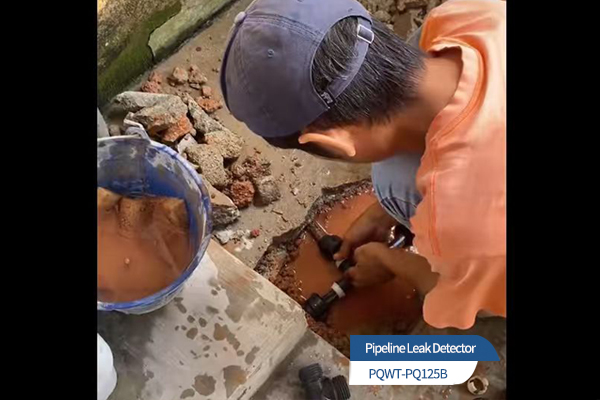
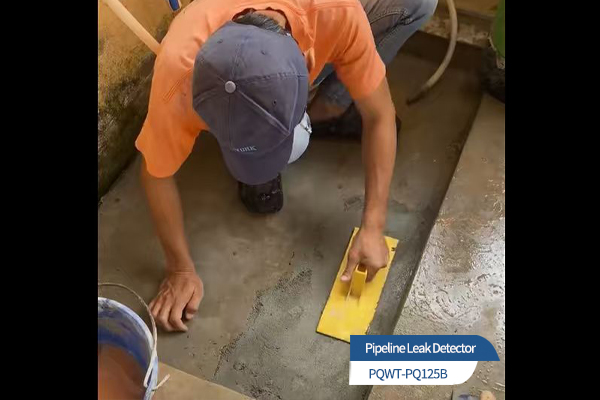
2. Cut out the damaged T-joint and replaced it with a new PE pipe connector.
3. Sealed the new connector to ensure a tight, leak-free connection.
4. Restored water supply and rechecked the repaired area using PQ125B to confirm the leak was fully resolved.
The entire repair process was efficient and orderly, taking only 3 hours from detection to water restoration, minimizing disruption to residents.
4. Key Advantages of PQWT-PQ125B Leak Detector
This real-world case highlights the PQ125B’s key advantages in leak detection:
High-Sensitivity Detection: Captures weak acoustic signals and accurately locates leaks within 1 meter, avoiding blind excavation.
Intelligent Noise Reduction: Detects leaks clearly even in noisy environments.
User-Friendly & Efficient: Visual screen plus headphone monitoring allows quick operation, even for beginners.
Durable & Reliable: Waterproof and dustproof design suitable for complex outdoor environments and long-term use.
For property management, water supply companies, and municipal pipeline maintenance, the PQ125B is more than just a leak detector—it improves repair efficiency and reduces operational costs.
5. Conclusion
Underground pipeline leaks are often hidden and difficult to detect. Without fast and accurate leak localization, repair costs and time can increase significantly. The PQWT-PQ125B Leak Detector, with its high-sensitivity sensors, intelligent noise reduction, and precise localization, proves its professional reliability in real-world scenarios.
Choosing a professional leak detection device is the first step in protecting every drop of water efficiently.